
 by
by 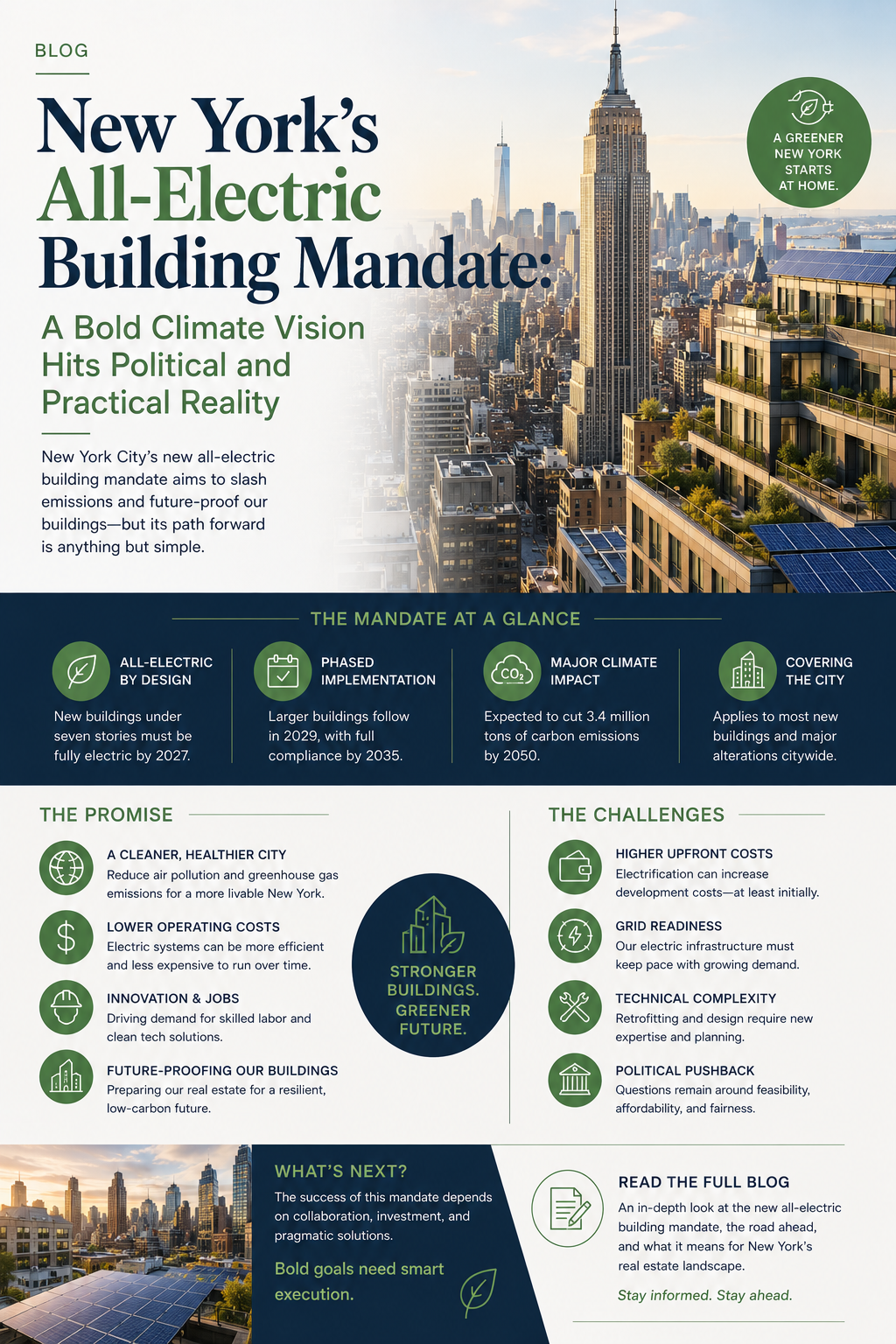
The Law That Would Have Made History
New York State was poised to become the first in the nation to mandate all-electric new construction, a landmark achievement in the fight against climate change. The All-Electric Buildings Act, signed into law in 2023 as part of the state budget, represented the most ambitious building electrification policy ever attempted at the state level . Its core requirement was straightforward yet transformative: beginning January 1, 2026, most new buildings under seven stories would be prohibited from using fossil fuels for heating, cooking, or hot water .
The law’s phased approach gave the construction industry time to adapt. Commercial and industrial buildings larger than 100,000 square feet received a three-year reprieve until 2029, at which point all new construction statewide would be required to go all-electric . This timeline was designed to align with New York’s broader Climate Leadership and Community Protection Act, which mandates an 85% reduction in statewide greenhouse gas emissions by 2050 .
Buildings account for approximately 32% of greenhouse gas emissions in New York State, making the construction sector a primary target for climate policy. The law’s architects argued that eliminating fossil fuel infrastructure from new buildings would prevent carbon lock-in for decades to come, while also improving indoor air quality and reducing reliance on volatile fossil fuel markets .
The Legal Challenge That Changed Everything
The path to implementation was never smooth. A coalition of trade groups, labor unions, and industry associations filed a federal lawsuit challenging the law’s validity . Their argument centered on the federal Energy Policy and Conservation Act (EPCA), which they claimed preempted state and local governments from regulating the energy use of covered appliances such as furnaces, ranges, and ovens .
In July 2025, the U.S. District Court for the Northern District of New York rejected these arguments and upheld the state’s authority to enact the building electrification mandate . The court’s ruling represented a significant legal victory for climate advocates, signaling that states retain substantial authority to regulate building emissions even when such regulations affect federally covered appliances .
But the battle was far from over. The plaintiffs promptly appealed to the Second Circuit Court of Appeals, and in a dramatic development on November 12, 2025, New York State agreed to suspend implementation of the law pending the appellate court’s decision . The stipulation effectively froze the January 1, 2026 effective date indefinitely, leaving developers, builders, and property owners in a state of uncertainty .
Governor Kathy Hochul’s administration defended the decision to pause the mandate, arguing that the suspension would “reduce regulatory uncertainty for developers during this period of litigation” while the state continued to defend the law in court . Environmental groups, however, were outraged, with Earth Justice calling the decision “a betrayal of Governor Hochul’s own commitment to address energy affordability and protect the climate for New Yorkers” .
The Economic Argument: Cost, Affordability, and Housing Crisis
The Price Tag of Electrification
Opponents of the all-electric mandate consistently pointed to cost as the primary barrier to implementation. According to the New York State Senate Minority Conference, compliance with the 2025 Energy Code would add approximately $7,500 to the cost of a single-family home, while the all-electric mandate itself would tack on an additional $25,000 per household . These figures were echoed by home builders across the state, with the Buffalo Niagara Building Association estimating a $20,000 cost increase per new home .
For developers already struggling with high interest rates, rising material costs, and labor shortages, these additional expenses threatened to make many projects financially unviable. The Southern Tier Home Builders and Remodelers Association warned that the mandate would “stagnate an already intense nationwide housing crisis,” forcing young families and first-time homebuyers out of the market entirely . Donna Ciancio, representing the association, noted that some homes already under construction with gas-powered systems would not have been grandfathered in, potentially leaving developers “stuck for that money, which falls back on homeowners” .
The Affordability Paradox
The tension between climate goals and housing affordability created a particularly acute dilemma for policymakers. New York State is in the midst of a severe housing shortage, with vacancy rates at historic lows and rents at record highs. Critics argued that adding tens of thousands of dollars to the cost of new construction would only exacerbate the crisis, reducing the supply of housing at precisely the moment when demand is highest .
Stacey Duncan, executive director of the Broome County Industrial Development Agency, articulated this concern succinctly: “Given the fact that we have a significant need for housing across New York state, housing at all levels of income and all types, that mandate would have put a significant strain on our ability to put new housing units in our communities” . Duncan argued that the state should adopt an “all-of-the-above approach to energy development that supports new housing, that supports new economic development sites, and that supports the growth of job creators in the community” .
The Grid Reliability Question
Beyond cost, opponents raised serious concerns about the capacity of New York’s electric grid to handle the increased demand from all-electric buildings. The New York Independent System Operator (NYISO) had issued multiple reports warning of potential challenges as the state moved toward electrification, and the state Comptroller had called for enhanced planning to address these issues .
However, the grid reliability argument was not universally accepted. A study by Switchbox, a nonpartisan think tank focused on state climate policy, found that reliability risks from building electrification were concentrated during summer peak demand periods when air conditioning loads are highest. The study noted that because virtually all new buildings already have air conditioning, the all-electric mandate would not significantly worsen summer peak loads. The researchers also found that New York’s grid had “significant spare capacity in the winter,” when heating loads would be the primary concern .
The New York City Dimension: Local Law 154
A Separate but Related Regulatory Framework
While the statewide All-Electric Buildings Act has been suspended, New York City continues to implement its own building electrification requirements through Local Law 154 of 2021. The city’s law takes a slightly different approach, prohibiting the onsite combustion of fuels that emit more than 25 kilograms of carbon dioxide per million British thermal units .
Local Law 154 phases in requirements based on building type and filing date, with the most stringent requirements taking effect in 2027 . This law applies to new buildings and certain major alterations, and it includes specific exemptions for manufacturing uses, laboratories, laundromats, hospitals, commercial kitchens, and emergency power generation . The city’s regulatory framework provides a partial roadmap for what statewide implementation might look like, should the courts ultimately uphold the All-Electric Buildings Act.
The EPCA Preemption Debate in the City
Local Law 154 has also faced legal challenges. The case Association of Contracting Plumbers of the City of New York v. City of New York is currently before the Second Circuit Court of Appeals, raising the same EPCA preemption questions that are central to the state-level litigation . In March 2025, the Southern District of New York dismissed the challenge, becoming the first federal court to openly disagree with the Ninth Circuit’s ruling that struck down Berkeley’s natural gas ban .
The Sabin Center for Climate Change Law at Columbia University filed an amicus brief in support of New York City, arguing that Local Law 154 represents a valid exercise of local police power and falls outside the scope of EPCA preemption. The brief emphasizes that the law “does not regulate the energy use of EPCA-covered appliances” but instead “imposes emissions standards on fossil fuel combustion in new construction, a restriction entirely separate from the technical purpose addressed by EPCA” .
The Political Landscape: Divided Voices
The Industry Position
For the real estate and construction industries, the all-electric mandate represented an existential threat. The New York State Builders Association, which joined the legal challenge against the law, argued that the mandate would make housing even more unaffordable while doing little to address global climate change . The New York Apartment Association and other landlord groups warned that the mandate would accelerate the deterioration of aging buildings while making new construction economically unviable.
John Graziose, a partner with Gerber Homes, offered a particularly stark assessment: “We’re looking at extremely high costs to develop new communities that are all-electric, because the transformers and substations need to be upgraded, and they take years—two, three years—to upgrade. And they take hundreds of millions of dollars” . Graziose warned that the mandate would “only worsen the housing market for New York residents, potentially forcing them to leave the state in search of cheaper living options” .
The Environmental Perspective
Environmental advocates viewed the mandate as essential to meeting New York’s climate goals. The CLCPA requires the state to achieve a carbon-free electricity system by 2040 and reduce total emissions by 85% by 2050. Buildings represent the second-largest source of emissions in the state, making building electrification a critical component of any credible climate strategy .
The New York State Assembly, which passed the All-Electric Buildings Act, emphasized the health benefits of electrification as well. Gas stoves produce nitrogen dioxide and other pollutants that have been linked to respiratory problems, particularly in children. By eliminating indoor combustion from new buildings, the law would improve indoor air quality for millions of New Yorkers .
The Political Divide
The debate over building electrification has become a flashpoint in New York’s broader political battles. Republican legislators have been uniformly critical of the mandate, with Senator George Borrello calling it “legally questionable, economically damaging and disconnected from the real-world challenges facing New Yorkers” . Senator Patrick Gallivan went further, warning that the mandate “puts jobs in jeopardy and will drive up costs, making it harder for New York families to achieve the dream of home ownership” .
Supporters of the mandate, including Governor Hochul and Democratic legislative leaders, have framed the debate differently. Hochul’s office said the governor “remains steadfast in her support for the plan” and “remains resolved to providing more affordable, reliable, and sustainable energy for New Yorkers” . The administration’s decision to pause implementation was presented not as a retreat but as a strategic move to reduce uncertainty for developers while the state defended the law in court .
Looking Ahead: The Second Circuit Decision and Beyond
The future of New York’s all-electric building mandate now rests with the Second Circuit Court of Appeals. The court’s decision will have implications far beyond New York State, as it will determine whether the federal Energy Policy and Conservation Act preempts state and local governments from regulating building emissions.
The Stakes of the Legal Battle
The Sabin Center’s amicus brief emphasizes the broader significance of the case: “A Second Circuit decision affirming the District Court’s interpretation of EPCA would affirm the authority of municipalities to implement ordinances like Local Law 154, and further, would empower those local governments outside of the Ninth Circuit to renew their pursuit of policy interventions that protect and improve their residents’ quality of life” . In other words, a ruling upholding New York’s building electrification mandate could revive similar efforts in other states and cities that had been chilled by the Ninth Circuit’s Berkeley decision.
Conversely, a ruling against the mandate could have a chilling effect on building electrification efforts nationwide. The plaintiffs in the New York case have argued that EPCA preemption is broad enough to invalidate any state or local regulation that affects the availability or use of federally covered appliances. As the Sabin Center brief notes, such an interpretation would be “limitless,” potentially extending to “land use and zoning regulations and other restrictions on the use of certain fuel types and appliances in different building types” .
The Political Path Forward
Even if the courts ultimately uphold the mandate, the political landscape may have shifted enough to make implementation difficult. The New York State Senate Minority Conference has called on Governor Hochul to issue an executive order allowing developers to return to the 2020 Energy Code, arguing that this would save New Yorkers “an average of $7,500 per home” . Republican legislators have also called for counties to be given the option to opt out of the mandate, arguing that “counties must be given the flexibility to make decisions that reflect local housing markets, infrastructure capacity, and community needs” .
Governor Hochul faces a delicate balancing act. She has positioned herself as a climate leader, signing the All-Electric Buildings Act into law and defending it in court. Yet she also confronts the practical realities of a housing crisis, a strained electric grid, and growing opposition from the construction industry. Her decision to pause implementation suggests that political pragmatism may ultimately temper the state’s climate ambitions.
Key Takeaways for Real Estate Professionals
Litigation Risk Remains: The Second Circuit’s decision will have profound implications for the economic viability of new construction projects. Developers should monitor the appeal closely and underwrite projects with multiple scenarios, including the possibility of a return to the pre-2020 building code.
Cost Uncertainty Persists: Even if the mandate is upheld, questions about the cost and feasibility of all-electric construction remain unanswered. The 467-m tax incentive program and other government subsidies may help bridge the gap, but developers should not assume that these programs will fully offset the cost increases.
Grid Infrastructure Matters: The capacity of the local electric grid will be a critical factor in determining the feasibility of all-electric construction in different parts of the state. Developers should evaluate grid capacity early in the project planning process and factor in the cost and timeline of any necessary upgrades.
Affordable Housing Implications: The mandate’s impact on affordable housing is a particular concern. Developers of affordable housing projects should explore available subsidies and incentives that could help offset the cost of electrification.
Exemptions and Waivers: The law includes exemptions for certain building types and waivers for cases where the local electric grid cannot provide reliable service. Developers should carefully review these provisions to determine whether their projects may qualify for relief.



Join The Discussion