 by
by 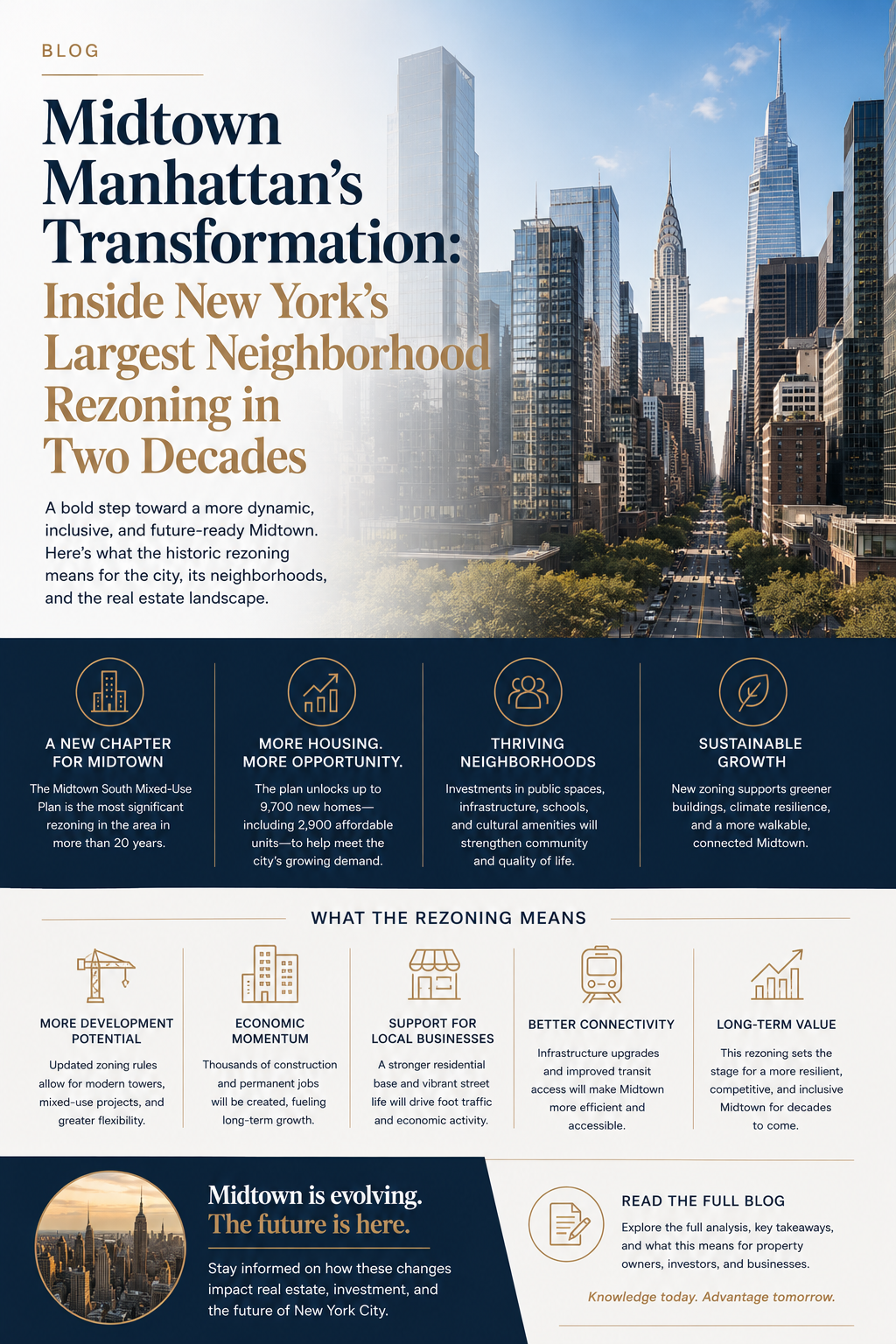
A 42-Block Vision That Could Reshape the Heart of New York City
Manhattan’s Garment District and surrounding neighborhoods south of Times Square are poised for a dramatic transformation after the New York City Council approved what officials are calling the largest residential neighborhood rezoning plan in two decades. The Midtown South Mixed-Use Plan will rezone approximately 42 blocks between 23rd and 40th streets, from Fifth Avenue to Eighth Avenue, paving the way for over 9,500 new housing units, including more than 2,800 permanently affordable residences .
For decades, much of this area remained trapped under industrial zoning that effectively prohibited new housing construction, stifling growth in a neighborhood that sits at the heart of the city’s transit network. Today, Midtown South is home to over 7,000 businesses and 135,000 jobs, yet its residential population has remained remarkably sparse. The plan aims to change that by creating a true 24/7 neighborhood where people can live, work, and play in one of the most connected locations in the Western Hemisphere.
Why This Neighborhood Needs a Reboot
The Garment District’s Long Decline
The Garment District and surrounding areas were hit hard by the pandemic and the changing work patterns that have reduced employers’ overall office space needs. But the neighborhood’s challenges predate COVID-19 by decades. The slow exodus of garment manufacturing from the district has left behind a collection of aging, functionally obsolete office buildings that struggle to attract modern tenants.
“Half the buildings in this neighborhood will be demolished in the next 10 years,” veteran New York dealmaker Bob Knakal, chairman and CEO of BK Real Estate Advisors, predicted in a recent interview. “Most of the office buildings in the Garment Center are functionally obsolete. They can’t handle new technology… everything that you need in a new building. You’re going to get all these massive buildings built.”
Empire State Realty Trust, which owns 2.3 million square feet within the Garment District and another four million square feet immediately adjacent, has witnessed a massive decrease in leasing and tenancy with garment and showroom companies. Michael Prunty, Senior Vice President of Empire State Realty Trust, testified before the City Council: “Over the past decade, our properties have seen garment companies go out of business or relocate out of the Garment District altogether. Today, our office spaces have been released to tenants in other industries, including finance, legal, technology, consumer products, and professional services.”
The district currently has one of the lowest residential populations in the city, with vacancy rates in many buildings hovering between 25 and 40 percent. What the neighborhood needs, and what its major property owners desire, is more residential development that will create a vibrant 24/7 live-work-play community, bringing better security, safety, and lower crime to an area that has long been a 9-to-5 business district.
The Numbers Behind the Plan
Housing Production at Scale
The Midtown South Mixed-Use Plan will enable the creation of over 9,500 new housing units across four distinct rezoning areas, with at least 2,800 of those units designated as permanently affordable . The plan was the first use of the Adams administration’s “City of Yes” land-use initiative, which the City Council approved in late 2024 to allow high-density districts with larger residential buildings to respond to the city’s housing crisis .
“To confront the citywide housing and affordability crisis, our city must build more homes and invest in housing solutions that allow generations of New Yorkers to remain in this city,” said Speaker Adrienne Adams. “The Council is proud to approve the historic Midtown South Mixed-Use Plan, as well as other housing projects, that will deliver over 10,000 new homes.”
City Planning Commission Director Dan Garodnick framed the plan as a way to reinvigorate Manhattan’s housing market: “Manhattan used to be the place where people started their journey. It is now at the bottom of housing production. With this plan, we’re making that dream a reality again in Midtown South.”
The Tax Incentive That Makes It Work
A key component enabling these conversions is the city’s 467-m incentive program, which gives developers tax exemptions in exchange for a portion of rental units being affordable. The program allows for tax abatements for as much as 35 years, with the major benefit being the elimination of uncertainty around property taxes.
Nathan Berman, managing principal and founder of Metro Loft, explained the significance: “Nobody knows where the next administration in the city, where they will be going in terms of taxes, and 467-m eliminates that uncertainty. For 35 years—which is huge—you can actually quantify everything. You’ve solved your real estate tax issue and uncertainty for 35 years – there’s a price to pay for that, and it works. The city is getting much-needed affordable units, which otherwise would just not be produced.”
Infrastructure Investment
The plan will be accompanied by $488 million in community benefits and infrastructure improvements. These investments include over $120 million in economic development resources to support Garment District businesses, preservation and advancement of the plan to establish a 34th Street car-free busway, completion of the Broadway Vision Plan to transform 21 blocks and create a car-free corridor on Broadway from 22nd to 25th Streets, street safety enhancements and subway station improvements, and critical investments for nearby schools, emergency medical services, and Bellevue Hospital.
The Housing Crisis Context
Record-Low Vacancy and Record-High Rents
The approval comes as New York contends with what the city has reported as a historic low rental vacancy rate of 1.4%. This figure, the lowest in decades and well below the 5% threshold that typically signals a housing emergency, means apartment hunters are competing for a very small number of units, often facing bidding wars, broker fees, and strict income requirements.
New York’s market-rate apartment vacancy rate of 3.5% is less than half the U.S. average of 8.1%. The city’s record-high market asking rent of about $3,350 is approximately double the national average of $1,772. The median residential rent in Manhattan in July rose to a new high for the fifth time in six months, reaching $4,700, up from $4,300 a year earlier. The median rent for both non-doorman and doorman apartments reached new highs, while the market share of bidding wars, which indicates demand, also rose to an all-time high.
Moses Gates, vice president of housing and neighborhood planning at the nonprofit Regional Plan Association, summarized the plan’s significance: “The neighborhood is within walking distance of virtually every major subway line, the busiest bus and rail stations in the country, and the largest jobs hub in the western hemisphere. Rezoning this area for more mixed-income housing and dedicated transit, while also investing in preserving the existing industries, is exactly the right approach.”
Implementation Challenges and Developer Perspectives
The Incentive Puzzle
While the plan holds significant promise, questions remain about its economic feasibility. The Manhattan Institute, in an analysis of the proposal, raised concerns that the combination of Mandatory Inclusionary Housing requirements and the expiration of the more generous 421-a tax exemption could undermine development economics. The new 485-x tax exemption, passed by the state legislature in 2024, is “far less generous, especially for the large buildings likely to be produced at FARs of 15 or 18,” with the main difference being the imposition of “prevailing wage” requirements.
The Manhattan Institute analysis further noted that the Draft Environmental Impact Statement for the plan “does not consider the economic feasibility of new construction, and the uncertainty concerning the economic feasibility of 485-x makes NYC DCP’s projections of future new construction questionable.”
The Leasing Bottleneck
Even as the plan promises thousands of new units, a separate challenge looms: getting those units leased quickly. A new report from the New York Housing Conference found that “excessive oversight” is slowing down leasing in city-subsidized buildings, keeping brand new, low-rent apartments vacant for months despite enormous demand. One Bronx affordable housing project tracked by the report took 27 months to lease just 180 apartments.
“It’s really frustrating when you see vacant affordable units. Taxpayers should be angry about that,” said Rachel Fee, executive director of the housing conference. “There has to be a better way to do this. It feels really antiquated, inefficient and clunky, and also really ripe for improvement now that we have a new mayor.”
What This Means for Real Estate Professionals
Massive Supply Injection: The plan represents the largest neighborhood-specific residential rezoning in two decades, adding approximately 9,500 units to a neighborhood with minimal residential population. This scale of new supply could meaningfully reshape Midtown South’s market dynamics over the coming decade.
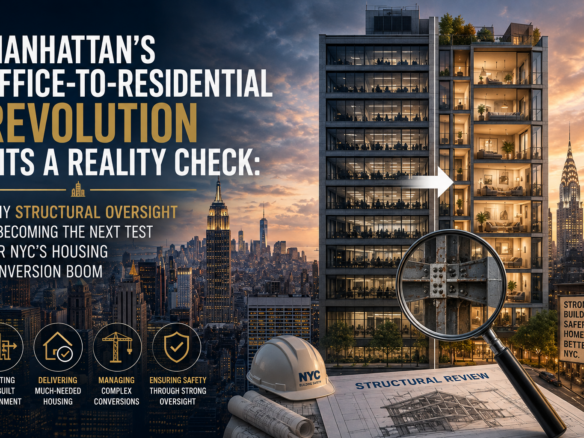
Office-to-Residential Conversions: The combination of aging, functionally obsolete office buildings and the 467-m tax incentive program creates significant conversion opportunities. Developers who can navigate the affordability requirements and tax incentive structures stand to benefit substantially.
Feasibility Questions Remain: The interplay between Mandatory Inclusionary Housing requirements, prevailing wage mandates, and the less generous 485-x tax exemption raises legitimate questions about the economic viability of some projects. Not every property will pencil out.
Community Investment Enhances Value: The $488 million in community benefits, including street safety improvements, subway station upgrades, and the Broadway car-free corridor, could significantly enhance the desirability of the area for both residential and commercial tenants.
Leasing Efficiency Matters: The 27-month leasing delay for affordable units in one Bronx project highlights the importance of addressing the “antiquated, inefficient and clunky” oversight process. Without reform, some of the plan’s affordable units could face similar delays, undermining the plan’s effectiveness.
Looking Ahead
The Midtown South Mixed-Use Plan represents a bold vision for a neighborhood that has struggled with the decline of its traditional manufacturing base and the shift toward remote and hybrid work. By allowing residential development in a transit-rich area that has been off-limits to housing for decades, the plan aims to create a more vibrant, 24/7 community while addressing the city’s severe housing shortage.
However, as the experiences of other cities have shown, planning approvals do not always translate into tangible results. The plan’s success will depend on developers’ ability to navigate the complex web of affordability requirements, tax incentives, and regulatory hurdles that accompany large-scale urban development. With the 467-m tax incentive offering 35 years of property tax certainty, there is reason to be cautiously optimistic, but the path from approval to occupancy will require careful attention to the economic feasibility of individual projects and the efficiency of the city’s affordable housing leasing process.
Knakal has described City of Yes as “the most overwhelmingly positive zoning legislation the city has implemented since 1961,” noting that the reforms are projected to enable roughly 80,000-plus new homes citywide over the next 15 years. Whether the Midtown South plan proves to be a model for similar rezoning efforts across the city remains to be seen, but for now, it represents a significant step toward addressing New York’s housing crisis in one of the most transit-accessible neighborhoods in the nation.