
 by
by 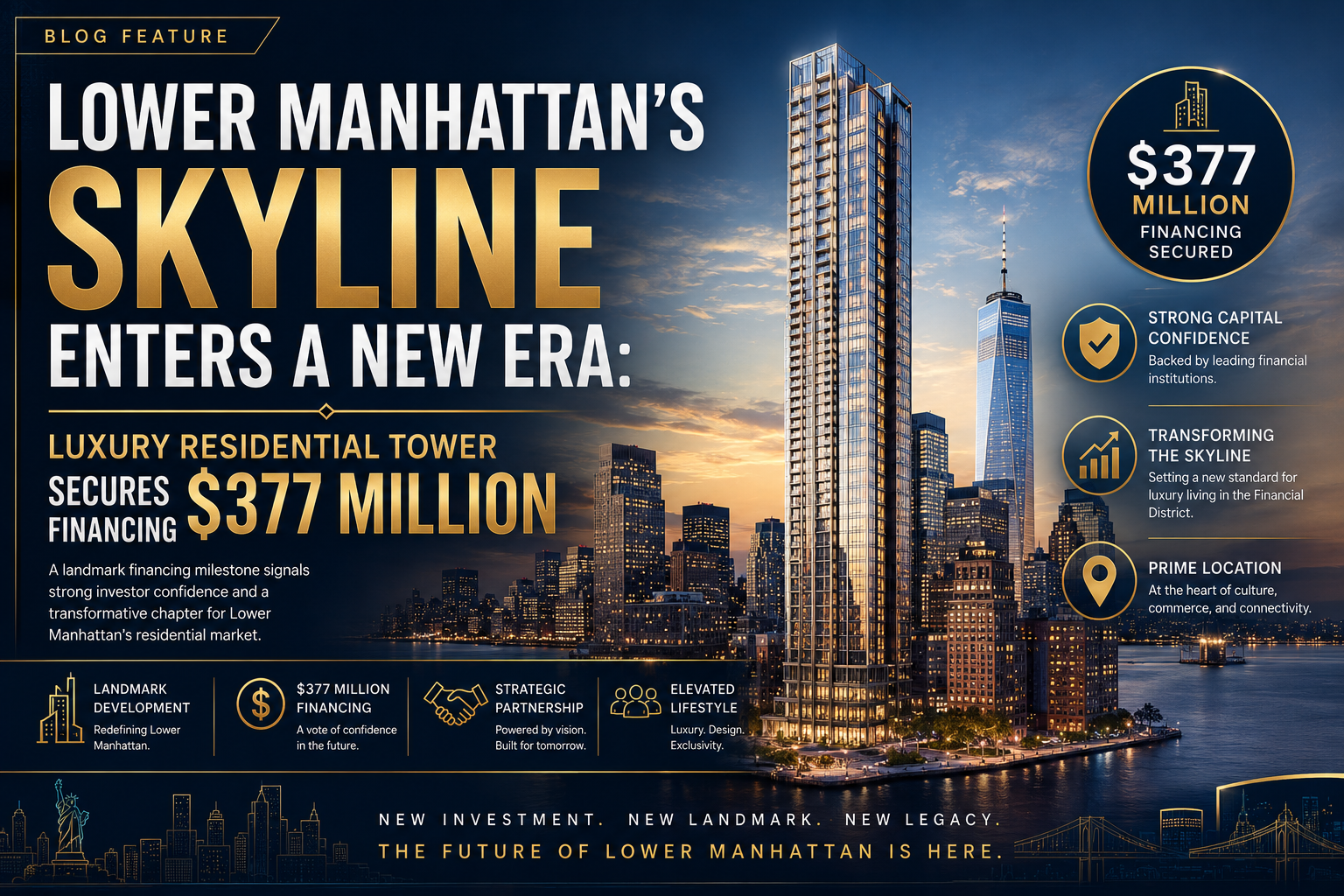
How a major ground-up apartment development signals the transformation of the Financial District from a traditional business hub into a 24/7 residential neighborhood.
Introduction: A New Residential Landmark Rising Downtown
Lower Manhattan has spent the past decade undergoing one of the most significant transformations in New York City real estate.
Once dominated almost exclusively by office towers and financial institutions, the Financial District is becoming a mixed-use neighborhood where residents, businesses, restaurants, and entertainment increasingly operate side by side.
A newly financed residential tower at 8 Carlisle Street represents the next stage of that evolution.
The project has secured $377 million in construction financing, allowing one of Lower Manhattan’s largest ground-up residential developments to continue moving forward.
The development is notable not only for its scale, but also because it represents a rare example of new residential construction in a neighborhood where recent housing growth has largely come from converting older office buildings.
A Rare Ground-Up Development in a Changing Neighborhood
Lower Manhattan’s residential boom has historically followed a different path than other New York neighborhoods.
Instead of large-scale new construction, much of the recent housing growth has come from adapting outdated office buildings into apartments.
The shift was driven by several factors:
- Changes in office demand after the pandemic
- Increased demand for downtown housing
- Government incentives for conversions
- The desire to create a more active neighborhood beyond business hours
However, the 8 Carlisle Street project represents a different approach: building a new residential tower from the ground up.
This distinction makes the project particularly significant in a market where new construction opportunities are limited.
A Skyline Project With Major Scale
The planned tower will become one of the tallest residential buildings in Lower Manhattan.
Key project details include:
- Height: Approximately 789 feet
- Floors: 64 stories
- Size: Approximately 444,413 square feet
- Residential units: 462 apartments
- Affordable housing component: Approximately 30%
- Market-rate apartments: Approximately 70%
Designed by Handel Architects and constructed by Consigli Construction, the building is expected to become a recognizable addition to the downtown skyline.
While Lower Manhattan has long been known for some of the world’s most famous office towers, residential buildings of this scale remain relatively limited.
Financing Confidence Signals Investor Demand
Securing $377 million in construction financing is a significant achievement in today’s real estate environment.
The financing structure includes:
- A $300 million senior construction loan
- $77 million in mezzanine financing
The commitment demonstrates continued investor confidence in New York City residential real estate, particularly in high-demand locations with strong long-term fundamentals.
Despite challenges facing the broader market—including higher interest rates, construction costs, and regulatory uncertainty—capital continues to flow toward well-positioned projects with strong locations and differentiated concepts.
The Evolution of the Financial District
The Financial District is no longer defined only by Wall Street.
Over recent years, the neighborhood has transformed into a true mixed-use community.
Today, residents are attracted by:
- Waterfront access
- Restaurants and retail
- Public transportation connections
- Cultural attractions
- Proximity to major employers
The area has evolved from a place where people worked during the day into a neighborhood where people live, work, and spend time throughout the entire week.
The development of large residential towers supports this broader urban transformation.
Demand for Downtown Housing Continues to Grow
The Financial District has become one of Manhattan’s strongest rental markets.
High demand has pushed average asking rents to record levels, reflecting strong interest from residents seeking luxury apartments in central locations.
Several factors continue to support demand:
- Limited new residential supply
- Growing neighborhood amenities
- Access to transportation
- Increased preference for live-work environments
The 8 Carlisle Street project enters a market where downtown living has become increasingly attractive to professionals, executives, and international residents.
Luxury Amenities Designed for a New Generation of Residents
Modern residential developments compete not only through location but also through lifestyle offerings.
The new tower will feature extensive amenities, including:
- Swimming pool
- Fitness center
- Outdoor terrace
- Coworking areas
- Resident lounges
- High-floor entertainment spaces
A 63rd-floor lounge will provide views of:
- Hudson River
- New York Harbor
- Lower Manhattan skyline
These features reflect a broader trend in luxury residential development: buildings are becoming complete lifestyle environments rather than simply places to live.
Affordable Housing Component Adds Public Benefit
Approximately 30% of the apartments will be designated as affordable housing under the now-expired 421-a tax incentive program.
The inclusion of affordable units highlights an important issue in New York’s housing market:
How can the city encourage large-scale development while expanding access to housing?
Mixed-income projects have become a major strategy for increasing supply while integrating affordability into new neighborhoods.
Implications for Lower Manhattan Real Estate
The project could have broader implications beyond a single building.
Its development signals several important trends:
1. Confidence in Downtown Residential Demand
Investors continue to view Lower Manhattan as a strong residential market despite changes in office demand.
2. Limited Supply Creates Opportunity
Ground-up residential sites remain extremely rare in Manhattan, increasing the value of projects that can move forward.
3. The Financial District Is Becoming a Full-Time Neighborhood
More residents create demand for:
- Retail
- Restaurants
- Services
- Entertainment
- Community spaces
This strengthens the overall real estate ecosystem.
A New Chapter for Lower Manhattan’s Skyline
The rise of 8 Carlisle Street represents more than another luxury apartment tower.
It reflects the broader transformation of New York City’s downtown core.
The Financial District is moving away from a traditional business-only identity and becoming a modern urban neighborhood built around diversity of uses.
As construction progresses and the tower approaches completion, the project will serve as a symbol of Lower Manhattan’s next chapter:
A neighborhood where finance, residential life, and urban culture exist together.
Conclusion: Residential Growth Becomes Downtown’s Future
The successful financing of this major residential tower demonstrates continued confidence in New York City’s housing market and the long-term potential of Lower Manhattan.
As office markets continue to evolve, residential development is becoming increasingly important in shaping the future of downtown neighborhoods.
The 8 Carlisle Street project represents a new model for Lower Manhattan—one defined not only by skyscrapers and financial institutions, but also by residents, communities, and a more balanced urban experience.
Join The Discussion