
 by
by 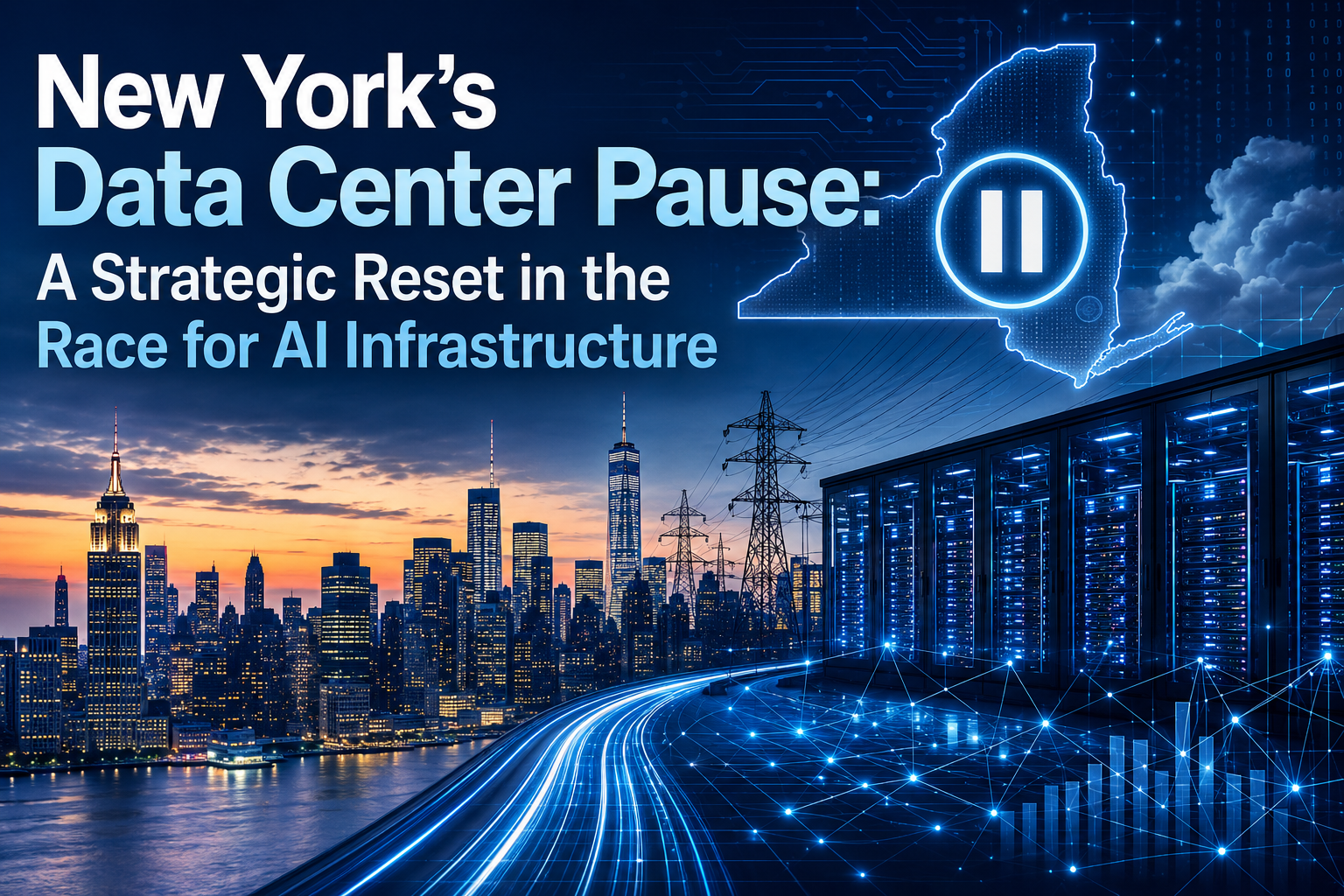
How the nation’s first hyperscale data center moratorium reflects the growing tension between artificial intelligence expansion, energy capacity, and responsible economic development.
Introduction: New York Takes a Different Approach to the AI Infrastructure Boom
The race to build the infrastructure supporting artificial intelligence is accelerating across the United States. As technology companies expand their computing capacity, demand for large-scale data centers has reached unprecedented levels.
However, New York has chosen a different path.
The state has become the first in the nation to impose a temporary pause on new hyperscale data center development, creating a one-year moratorium on permits for facilities requiring 50 megawatts or more of electricity.
The decision represents a significant moment in the evolution of digital infrastructure.
While many states are competing to attract data center investment, New York is taking time to evaluate the long-term impact of these facilities on energy systems, environmental conditions, and local communities.
The move raises an important question:
Should governments prioritize rapid technology expansion, or should they establish stronger standards before large-scale development accelerates?
The Growing Importance of Data Centers in the AI Economy
Artificial intelligence has transformed data centers from specialized technology facilities into essential economic infrastructure.
Modern AI systems require enormous computing power to operate, creating demand for:
- High-capacity data centers
- Advanced electrical infrastructure
- Large-scale computing facilities
- Reliable energy networks
- Specialized cooling systems
As companies compete to develop more powerful AI models, the need for computing capacity continues to increase.
This expansion has created a new category of commercial real estate where access to electricity and infrastructure can be as important as location.
Why New York Chose a Temporary Pause
The state’s decision reflects concerns about the potential impact of hyperscale facilities on existing infrastructure.
Large data centers can place significant demands on:
- Electricity grids
- Water resources
- Local infrastructure systems
- Community planning
Officials have argued that rapid development without proper planning could create long-term challenges for residents and businesses.
The temporary pause provides an opportunity to establish a more comprehensive framework addressing:
- Energy consumption
- Environmental impacts
- Infrastructure investment
- Community benefits
- Future development standards
Rather than rejecting data center growth, New York is attempting to create conditions under which expansion can occur more sustainably.
A Strategic Decision Before a Larger Development Wave
New York currently represents a relatively small portion of the national data center market.
Compared with states that have become major data center hubs, New York has limited existing capacity.
This creates a unique situation.
Supporters of the moratorium argue that the state is acting before large-scale development accelerates, allowing policymakers to establish rules before projects become widespread.
The strategy is based on the idea that early planning can prevent future infrastructure challenges.
The Economic Argument: Opportunity Versus Regulation
The debate surrounding the moratorium reflects a larger economic question.
The Case for Expansion
Supporters of rapid development argue that data centers bring significant economic benefits, including:
- Construction activity
- Technology investment
- Infrastructure improvements
- High-skilled employment
- Increased economic competitiveness
As artificial intelligence becomes a major driver of global economic growth, regions that attract data center investment may gain strategic advantages.
The Case for Greater Oversight
Supporters of regulation argue that economic growth must be balanced with infrastructure capacity.
Their concerns include:
- Increased electricity demand
- Potential impact on utility costs
- Environmental pressure
- Limited community benefits
The argument is that data center development should not move forward without ensuring that local infrastructure can support long-term demand.
The Commercial Real Estate Impact
The data center industry represents one of the fastest-growing areas of commercial real estate.
Unlike traditional office or industrial properties, data centers depend on specialized conditions:
- Reliable energy access
- Strong connectivity
- Appropriate zoning
- Large development sites
- Long-term infrastructure planning
New York’s decision could influence how developers approach future projects.
Companies may increasingly evaluate:
- Regulatory environment
- Energy availability
- Local approval processes
- Community support
The location strategy for future data centers will depend not only on land availability but also on government policy.
The Energy Challenge Behind AI Growth
At the center of the debate is one critical issue: electricity.
Artificial intelligence requires enormous computing power, and computing power requires energy.
As more data centers are developed, governments must consider:
- How electricity demand will increase
- Whether grids can handle additional capacity
- How infrastructure upgrades will be financed
- How costs will be distributed
The future expansion of AI infrastructure will depend heavily on the ability to create reliable and sustainable energy systems.
A New Model for Data Center Development
New York’s approach suggests that the next phase of data center development may involve stronger partnerships between:
- Technology companies
- Utility providers
- Real estate developers
- Government agencies
- Local communities
Future projects may need to provide measurable benefits, such as:
- Infrastructure improvements
- Workforce opportunities
- Energy investments
- Community development contributions
The industry may be moving away from simply building facilities toward creating broader economic partnerships.
Implications for the National Data Center Market
New York’s decision could influence other states and municipalities evaluating similar projects.
As communities across the country consider the impact of large-scale facilities, policymakers may increasingly focus on:
- Responsible growth
- Energy planning
- Environmental standards
- Economic benefits
The result could be a more competitive market where developers choose locations based on regulatory certainty, infrastructure readiness, and long-term sustainability.
Conclusion: A Pause Designed to Shape the Future
New York’s data center moratorium represents a significant shift in how governments approach artificial intelligence infrastructure.
The state is choosing to slow the pace of development in order to create a stronger framework for future growth.
The decision highlights the central challenge facing policymakers nationwide:
How can communities capture the economic benefits of artificial intelligence while protecting energy systems, affordability, and quality of life?
The answer will shape the next generation of digital infrastructure.
For developers, investors, and technology companies, New York’s message is clear: the future of AI development will depend not only on computing power, but also on responsible planning, reliable infrastructure, and the ability to create value for the communities where these projects are built.

Join The Discussion